
Walk into a modern warehouse and you may notice something different.
The facility is not simply filled with more machines. It is becoming more connected, more responsive, and increasingly capable of making decisions in real time.
Robots move products between workstations. Software adjusts workflows as order volumes change. Cameras inspect inventory and equipment. Employees spend less time walking, searching, and performing repetitive tasks, allowing them to focus on exceptions, customer needs, and higher-value responsibilities.
That evolution will continue in 2027.
The 2026 MHI Annual Industry Report found that 56% of supply chain leaders were increasing their investments in technology and innovation. More than half planned to spend over $1 million, with investments focused on areas such as artificial intelligence, robotics, visibility, resilience, and workforce challenges.
Here are the warehouse automation trends to watch.
- AI Moves from Reporting to Decision-Making
Artificial intelligence is becoming more involved in daily warehouse operations. AI-enabled systems can help forecast demand, prioritize orders, coordinate equipment, optimize inventory placement, and identify potential disruptions.
The DHL Logistics Trend Radar 8.0 identifies agentic AI as a major trend, with intelligent systems beginning to plan, decide, and act toward defined goals while working alongside people.
For business leaders, the key question will not be whether AI is available. It will be whether the warehouse has the connected systems, dependable data, and equipment infrastructure needed to use it effectively.
- Autonomous Mobile Robots Become More Flexible
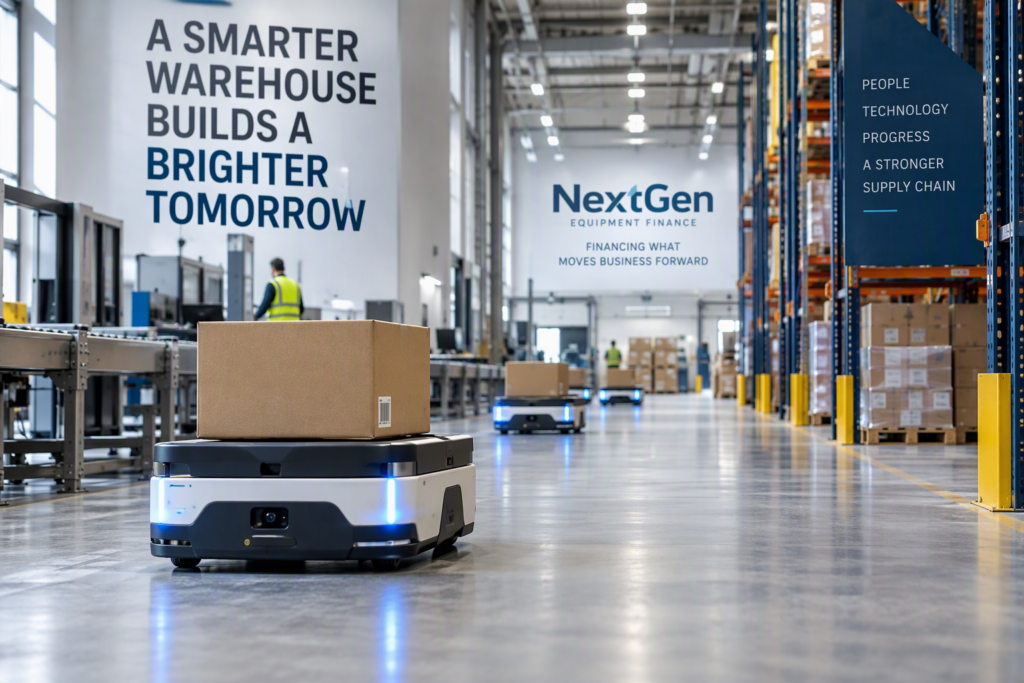
Autonomous mobile robots, or AMRs, can transport products, components, pallets, carts, and totes through a facility without relying on fixed tracks.
Unlike older guided systems that typically follow predetermined paths, AMRs can use cameras, sensors, mapping technology, and onboard computing to navigate a changing environment. That flexibility can make them useful for facilities with multiple workflows or fluctuating demand.
In 2027, businesses are likely to look beyond isolated robot deployments and focus more heavily on coordinated fleets. The objective will be to connect robots with warehouse management and execution systems, so the equipment supports the entire operation rather than solving only one task.
- Warehouse Software Takes Center Stage
A warehouse can have great equipment and still experience bottlenecks if its systems do not communicate.
That is why warehouse execution systems and orchestration platforms will become increasingly important. These solutions can connect robotics, conveyors, storage systems, inventory software, and employees through one coordinated workflow.
In 2027, having the most equipment may matter less than having the best-connected equipment.
- Inbound Automation Gets More Attention
Historically, many automation investments focused on picking, packing, and shipping. Now, companies are taking a closer look at receiving.
Robotic depalletizing, automated pallet building, AI-enabled vision inspection, and autonomous pallet movement can help products move from the dock to storage with fewer manual touches. Industry analysis has identified inbound automation as an important area of investment as companies search for their next opportunity to improve efficiency.
- Computer Vision Creates Better Visibility
Computer vision uses cameras and intelligent software to read labels, track inventory, inspect packaging, verify shipments, and monitor equipment.
The DHL Logistics Trend Radar 7.0 highlighted computer vision as an important logistics application of AI, including its ability to track warehouse assets using identifiers such as QR codes.
This technology can give businesses a clearer picture of what is happening across the facility without relying entirely on manual inspections.
- Digital Twins Help Companies Test Before They Invest
A digital twin is a virtual representation of a physical operation, process, or facility.
Instead of changing a warehouse layout and hoping it works, a company can model workflows, equipment movement, storage configurations, and demand scenarios in a digital environment.
Digital twins can help decision-makers ask practical questions:
- Where are bottlenecks likely to occur?
- How will a new robot affect traffic patterns?
- Does the facility need more storage or better slotting?
- What happens during peak-volume periods?
- How should equipment and workstations be positioned?
For companies planning a major automation project, simulation can provide another layer of insight before physical equipment is installed.
Planning for Automation Without Delaying Growth
Businesses do not need to automate everything at once.
A smart strategy often begins with the process creating the greatest operational constraint. That might be excessive employee travel, slow receiving, repetitive material movement, limited storage capacity, or disconnected warehouse systems.
Solve the right problem first, measure the results, and build from there.
Of course, warehouse automation can require a significant investment. A project may include robotics, conveyors, racking, forklifts, batteries and chargers, software, controls, installation, and supporting infrastructure.
Flexible equipment financing can help businesses spread those costs over time, preserve working capital, and align payments with the expected use of the equipment.
Planning a warehouse automation project for 2027? Contact NextGen Equipment Finance to explore financing options designed around your equipment, timeline, and business goals.
The Smart Warehouse Starts With a Smart Plan